The Intelligent Asset Allocator by William J. Bernstein
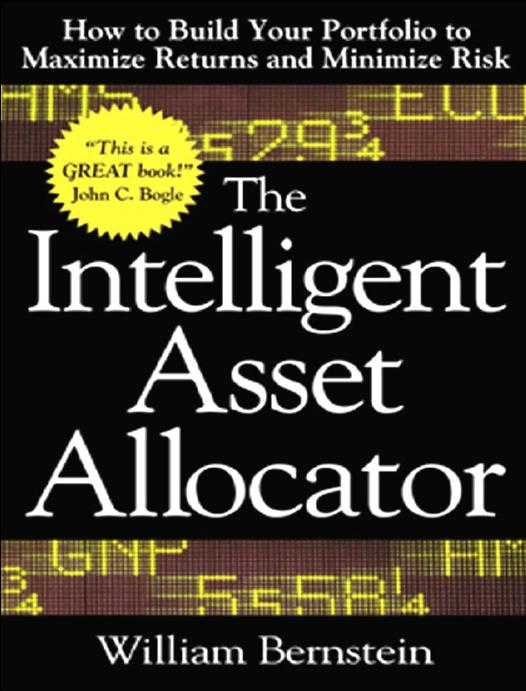
Author:William J. Bernstein
Language: eng
Format: mobi, epub, pdf
Publisher: McGraw-Hill Education
Published: 2001-03-23T00:00:00+00:00
Investment Newsletters
OK, so human beings cannot pick stocks. Perhaps a more fruitful approach would be to time the market and avoid losses by pulling out of stocks during the bear markets. Maybe investment newsletter writers, whose specialty this is, might help us do better. John Graham and Campbell Harvey, two finance academics, recently performed an exhaustive review of 237 newsletters. They measured the ability of these newsletters to time the market and found that less than one-quarter of the recommendations were correct, much worse than the monkey score of 50%. Even worse, there were no advisors whose calls were consistently correct, although there were many who were wrong with amazing regularity. They cited one very well known advisor whose predictions produced an astounding annualized 5.4% loss during a 13-year period when the S&P 500 produced a 15.9% gain. Astonishingly, there is even a newsletter which ranks the performance of other newsletters; its publisher believes that he can identify persistently excelling advisors. The work of Graham and Harvey suggests that in reality he is actually the judge at a coin-flipping contest. When it comes to newsletter writers, remember Malcolm Forbes’ famous dictum: the only money made in newsletters is through subscriptions, not from taking the advice.
Noted author, analyst, and money manager David Dreman, in Contrarian Market Strategy: The Psychology of Stock Market Success, painstakingly tracked expert opinion back to 1929 and found that it underperformed the market with 77% frequency. It is a recurring theme of almost all studies of “consensus” or “expert” opinion that it underperforms the market about three-fourths of the time. Mr. Dreman argues that this is a powerful argument against the efficient market hypothesis: how can the markets be efficient when the experts lose with such depressing regularity?
All of this evidence falls under the rubric of what is known as market efficiency. A detailed discussion of the efficient market hypothesis is beyond the scope of this book, but what it means is this: it’s futile to analyze the prospects for an individual stock (or the entire market) on the basis of publicly available information, since that information has already been accounted for in the price of the stock (or market). Cognoscenti frequently respond to news about a company with a weary, “It’s already been discounted into the stock price.” In fact, a very good argument can be made that the market more often than not overreacts to events, falling too much on bad news and rising too much on good news. The corollary of the efficient market hypothesis is that you are better off buying and holding a random selection, or as we have shown above, an index of stocks rather than attempting to analyze the market.
I am continually amazed at the amount of time the financial and mass media devote to well-regarded analysts attempting to divine the movements of the market from political and economic events. This is a fool’s errand. Almost always these analysts are the employees of large brokerage houses; one would think that these organizations would tire of looking foolish on so regular a basis.
Download
The Intelligent Asset Allocator by William J. Bernstein.epub
The Intelligent Asset Allocator by William J. Bernstein.pdf
This site does not store any files on its server. We only index and link to content provided by other sites. Please contact the content providers to delete copyright contents if any and email us, we'll remove relevant links or contents immediately.
International Integration of the Brazilian Economy by Elias C. Grivoyannis(111061)
The Radium Girls by Kate Moore(12029)
Turbulence by E. J. Noyes(8051)
Nudge - Improving Decisions about Health, Wealth, and Happiness by Thaler Sunstein(7709)
The Black Swan by Nassim Nicholas Taleb(7130)
Rich Dad Poor Dad by Robert T. Kiyosaki(6633)
Pioneering Portfolio Management by David F. Swensen(6301)
Man-made Catastrophes and Risk Information Concealment by Dmitry Chernov & Didier Sornette(6019)
Zero to One by Peter Thiel(5802)
Secrecy World by Jake Bernstein(4753)
Millionaire: The Philanderer, Gambler, and Duelist Who Invented Modern Finance by Janet Gleeson(4478)
The Age of Surveillance Capitalism by Shoshana Zuboff(4293)
Skin in the Game by Nassim Nicholas Taleb(4250)
The Money Culture by Michael Lewis(4207)
Bullshit Jobs by David Graeber(4192)
Skin in the Game: Hidden Asymmetries in Daily Life by Nassim Nicholas Taleb(4007)
The Dhandho Investor by Mohnish Pabrai(3766)
The Wisdom of Finance by Mihir Desai(3748)
Blockchain Basics by Daniel Drescher(3583)
